
How to Deep Clean a Kitchen?
Here is a quick answer:
To deep clean a kitchen, work top to bottom through every surface, appliance, and storage area using degreasers, baking soda, and white vinegar. Start by clearing surfaces, then scrub the oven, stovetop, range hood, refrigerator, sink, cabinets, and countertops before finishing with the floors. The full process takes 3-5 hours.
What Does Deep Cleaning a Kitchen Mean?
Deep cleaning a kitchen means thoroughly cleaning every surface, appliance, and storage space, including areas skipped during regular cleaning. This includes the inside of the oven, behind appliances, cabinet interiors, range hood filters, and grout lines. A deep clean removes built-up grease, bacteria, food residue, and odors that routine wiping misses. Most kitchens need a deep clean every 3-6 months depending on cooking frequency.
Supplies and Tools You Need Before You Start
Gather everything before you begin. Stopping mid-clean to search for supplies wastes time and breaks your workflow.
| Supply | Purpose |
| Baking soda | Scrubbing and deodorizing |
| White vinegar | Cutting grease and disinfecting |
| Dish soap | General cleaning |
| All-purpose degreaser spray | Cabinets, stovetop, countertops |
| Microfiber cloths (6+) | Streak-free wiping |
| Scrub brush or old toothbrush | Grout, crevices, faucet base |
| Rubber gloves | Hand protection |
| Mop and bucket | Floor cleaning |
| Trash bags | Decluttering |
Optional but useful: a steam cleaner, Magic Eraser pads, and a stainless steel polish.
How to Deep Clean a Kitchen?
Here is the quick guide on how to deep clean your kitchen:
- Clear and declutter all countertops and surfaces first.
- Scrub the oven and stovetop with a baking soda paste.
- Degrease range hood filters in hot soapy water.
- Empty and wipe down the inside of the refrigerator.
- Disinfect the sink, faucet, and countertops thoroughly.
- Wipe cabinets inside and out with a degreaser spray.
- Mop the floor and scrub baseboards last.
At Golden Spotless, we deliver reliable handyman solutions and professional kitchen deep cleaning Dubai, backed by 10 years of experience, trained specialists, industry-grade equipment, and a commitment to high hygiene standards.
Let’s go through each step in detail.
Step 1 – Clear and Declutter All Surfaces
Remove everything from countertops, the stovetop, and the inside of the refrigerator. Toss expired food, recycle empty containers, and relocate anything that doesn’t belong in the kitchen. Clearing surfaces first gives you unobstructed access to every area and prevents you from cleaning around clutter.
Step 2 – Deep Clean the Oven and Stovetop
Oven: Coat the inside with a thick baking soda paste (mix ½ cup baking soda with 3 tablespoons water). Leave it on for a minimum of 12 hours or overnight. Wipe away the paste with a damp microfiber cloth, then spray white vinegar on any remaining residue. The vinegar reacts with leftover baking soda, lifting stubborn grease. For self-cleaning ovens, run the cleaning cycle and wipe out ash after it cools.
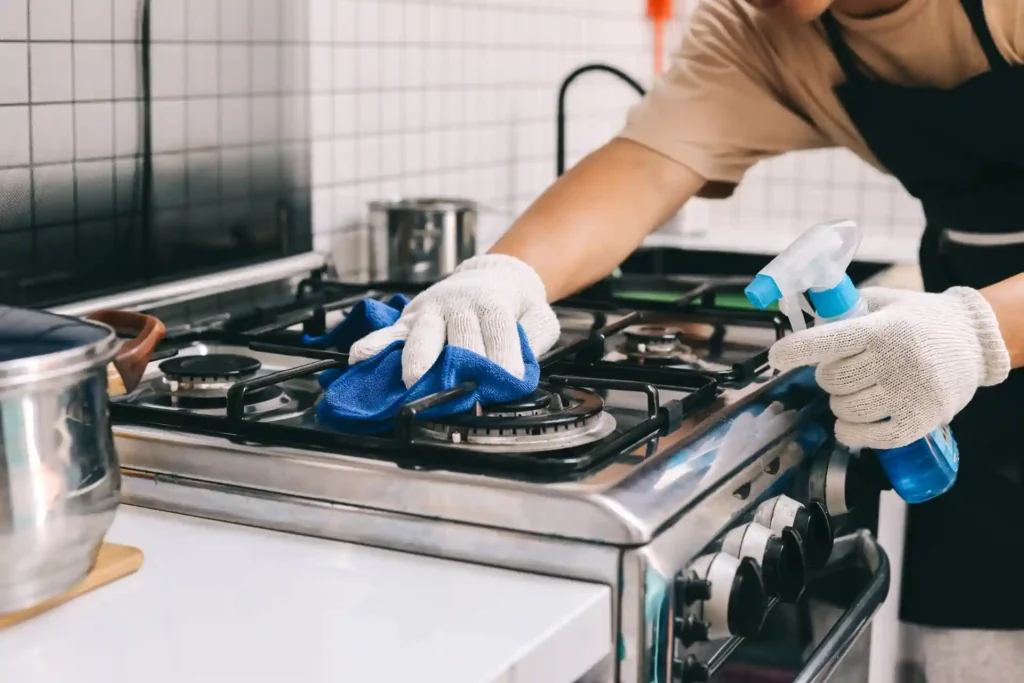
Stovetop: Remove grates and burner caps. Soak them in hot soapy water for 20 minutes. Spray the stovetop surface with an all-purpose degreaser and scrub with a non-scratch pad. Scrub soaked grates with a stiff brush, rinse, and dry completely before replacing.
Step 3 – Degrease Range Hood and Filters
Range hood filters trap grease and become fire hazards if ignored. Remove the metal mesh filters and submerge them in a sink filled with very hot water, ¼ cup dish soap, and ¼ cup baking soda. Soak for 15–20 minutes, then scrub with a brush. Rinse and air dry before reinstalling. Wipe the hood exterior with a degreaser spray and microfiber cloth.
Step 4 – Clean Inside the Refrigerator
Remove all food and pull out every shelf and drawer. Wash shelves and drawers in the sink with warm water and dish soap. While they dry, wipe the inside walls of the fridge with a solution of 1 tablespoon baking soda per 1 quart of warm water — this cleans and neutralizes odors without harsh chemicals. Wipe the door seals with a toothbrush dipped in the same solution. Replace drawers and shelves, then return food after checking expiration dates.
Step 5 – Scrub the Sink and Faucet
Sprinkle baking soda across the entire sink basin and scrub with a damp sponge. For stainless steel sinks, scrub in the direction of the grain to avoid scratching. Pour white vinegar over the baking soda to dissolve mineral deposits and deodorize the drain. Clean the faucet base and handles with an old toothbrush. Finish by wiping everything dry with a microfiber cloth to prevent water spots.
Step 6 – Wipe Down Cabinets (Inside and Out)
Cabinet exteriors collect cooking grease and fingerprints. Spray cabinet doors and drawer fronts with an all-purpose degreaser, wait 30 seconds, then wipe clean with a microfiber cloth. For painted or laminate cabinets, avoid abrasive scrubbers. For wood cabinets, follow with a wood-safe polish after cleaning. Empty each cabinet interior, wipe shelves with a damp cloth, and reline with fresh shelf liner if needed.
Step 7 – Clean Small Appliances
Coffee maker: Run a descaling cycle with a 1:1 mixture of white vinegar and water, followed by two plain water cycles.
Microwave: Place a microwave-safe bowl with 1 cup water and 2 tablespoons white vinegar inside. Microwave on high for 5 minutes. Steam loosens splatters. Wipe clean with a microfiber cloth.
Toaster: Unplug it, remove and empty the crumb tray, and wipe the exterior with a damp cloth.
Step 8 – Disinfect Countertops
Spray countertops with a food-safe disinfectant or a diluted white vinegar solution (1:1 ratio). Let the solution sit for 60 seconds to kill bacteria before wiping. For stone countertops like granite or marble, skip vinegar, it etches the surface. Use a pH-neutral stone cleaner instead. Pay extra attention to areas near the stovetop and sink where cross-contamination risk is highest.
Step 9 – Mop the Floor and Clean Baseboards
Sweep or vacuum the floor first to remove loose debris. Mop with a floor cleaner appropriate for your floor type (hardwood, tile, or vinyl). Work from the far corner of the kitchen toward the exit so you don’t walk over freshly mopped areas. Wipe baseboards with a damp microfiber cloth to remove grease buildup and dust. Clean under the refrigerator and stove with a vacuum attachment or a long-handled duster.
How Long Does It Take to Deep Clean a Kitchen?
Deep cleaning a kitchen takes 3-5 hours for an average-sized kitchen. A small apartment kitchen takes closer to 2–3 hours. A large kitchen with double ovens, a walk-in pantry, or lots of cabinetry can take 5-7 hours. Spreading the process over two days appliances one day, surfaces and floors the next makes it more manageable.
How Often Should You Deep Clean Your Kitchen?
Deep clean a kitchen every 3-6 months. Households that cook daily benefit from a deep clean every 3 months. Households that cook occasionally can go up to 6 months between deep cleans. The oven needs attention every 3 months. Refrigerators should be deep cleaned quarterly. Range hood filters need cleaning every 1-2 months regardless of cooking frequency.
Deep Cleaning Kitchen at a Glance
| Area | Method | Frequency | Time Needed |
| Oven | Baking soda paste + vinegar | Every 3 months | 45–60 min |
| Stovetop | Degreaser + scrub brush | Monthly | 15–20 min |
| Range hood filters | Hot soapy water soak | Every 1–2 months | 20 min |
| Refrigerator | Warm water + dish soap | Every 3 months | 30 min |
| Sink | Baking soda + vinegar | Weekly | 10 min |
| Cabinets | Degreaser spray + microfiber | Every 3 months | 30–45 min |
| Countertops | Disinfectant spray | Weekly | 10 min |
| Floor | Mop with floor cleaner | Weekly | 20 min |
Keep Your Kitchen Clean Between Deep Cleans
Below are the some pro tips:
- Wipe the stovetop after every use while it’s still slightly warm.
- Line cabinet shelves with removable shelf liner for easy replacement.
- Clean the microwave interior once a week with the steam method.
- Wipe refrigerator door handles daily, they are among the most bacteria-laden surfaces in a home.
- Empty the range hood grease cup monthly to prevent overflow.
Frequently Asked Questions
What is the fastest way to deep clean a kitchen?
The fastest way to deep clean a kitchen is to work in a top-to-bottom, zone-by-zone sequence without backtracking. Start the oven with baking soda paste the night before so the overnight soak does the hard work for you. Focus on the oven, refrigerator, and cabinets simultaneously by setting timers for soaking tasks and cleaning other areas while you wait.
How do you deep clean a kitchen in one day?
Deep cleaning a kitchen in one day requires starting the oven the night before and following a strict zone-by-zone order on cleaning day. Begin with appliances in the morning, move to cabinets and surfaces midday, and finish with the floors in the afternoon. A 3–5 hour time block with no interruptions is enough for most kitchens.
What cleaning products are best for deep cleaning a kitchen?
The best products for deep cleaning a kitchen are baking soda, white vinegar, dish soap, and an all-purpose degreaser. Baking soda removes grease from stovetops and ovens. White vinegar cuts mineral deposits and disinfects surfaces. A commercial degreaser like Simple Green handles heavy cabinet grease efficiently. Avoid bleach on colored grout or natural stone surfaces.
How do you deep clean kitchen cabinets without damaging them?
Deep cleaning kitchen cabinets without damage requires using a gentle all-purpose degreaser diluted with water and a soft microfiber cloth. Never use abrasive scrubbers on painted or laminate cabinets. For wood cabinets, always wipe in the direction of the wood grain and follow with a wood conditioner or polish to prevent drying. Test any new product on a hidden area first.
What should I clean first when deep cleaning a kitchen?
Start with the oven when deep cleaning a kitchen, apply baking soda paste and let it sit while you clean everything else. After applying the paste, move to clearing and decluttering surfaces, then work through the refrigerator, range hood, sink, and cabinets. Clean countertops and floors last so any debris from upper surfaces is captured in the final sweep.


