
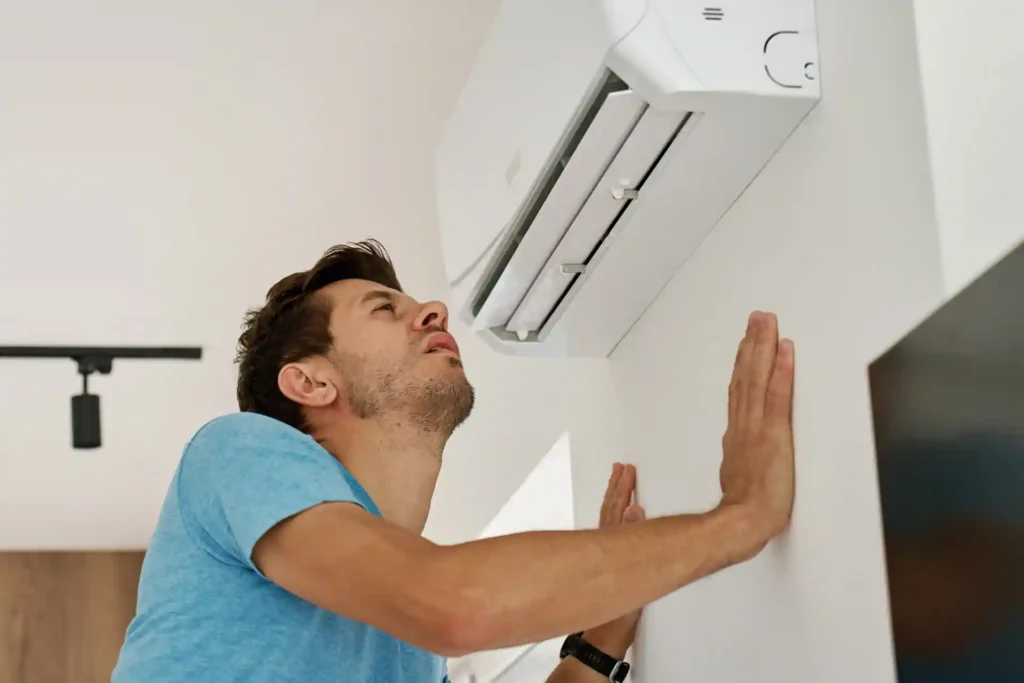
Why is My AC Making Loud Noise?
If your AC is making a loud noise, don’t wait. In Dubai’s climate where summers push temperatures past 45°C and units run 18+ hours a day, an unusual AC sound is rarely just “one of those things.” It’s your system telling you something is wrong, and the longer you ignore it, the worse the damage gets.
This guide covers every noise your split, central, or ducted AC might make, what it actually means, and what to do next whether you’re managing a villa in Emirates Hills, an apartment in JBR, or a commercial building in Business Bay.
By the end, you’ll know exactly which sounds are minor annoyances and which ones could cost you AED 3,000–15,000 in compressor replacement if left unchecked.
The 8 Most Common AC Noises and Their Meaning
1. Clunking Noise
What it sounds like: A heavy thud or repeated banging, often from the outdoor unit.
What it means: A loose or broken component (typically a connecting rod, piston pin, or crankshaft inside the compressor) is hitting the unit’s casing. In some cases, a loose fan blade is the culprit.
Urgency: HIGH. Switch off the AC immediately. Running it risks destroying the compressor entirely, which is the most expensive component in any AC system.
2. Hissing or Whistling
What it sounds like: A sharp, continuous hiss (like air escaping from a balloon) or a high-pitched whistle.
What it means: Almost always a refrigerant leak. Refrigerant (typically R-410A or R-32 in modern Dubai systems) escapes under pressure, producing that distinctive hissing sound. A whistling sound can also indicate duct leaks in central AC systems or a clogged air filter forcing air through a narrow gap.
Urgency: HIGH for hissing. Refrigerant leaks reduce cooling efficiency, spike your electricity bill, and pose health risks. They also violate UAE environmental regulations if not handled by a certified technician.
Urgency: MEDIUM for whistling. Check and replace your filter first. If the sound persists, call a technician.
3. Rattling
What it sounds like: A loose, metallic shaking like coins in a tin box.
What it means: Loose screws, panels, or debris (leaves, dust accumulation in Dubai’s sandy environment) caught in the outdoor unit. In split AC systems, the indoor unit’s front panel may have worked loose over time.
Urgency: LOW to MEDIUM. Often fixable with a screwdriver and a quick clean. But rattling can also signal a failing fan motor bearing rule that out with a professional check.
4. Buzzing
What it sounds like: A low, electrical hum or buzz, constant or intermittent.
What it means: Electrical issues like loose wiring, a failing capacitor, a malfunctioning contactor relay, or the compressor struggling to start. In Dubai’s high-heat environment, capacitors degrade faster than in temperate climates and are one of the most common AC repair items.
Urgency: HIGH. Electrical faults are a fire risk. Do not operate the unit until a licensed technician inspects it.
5. Squealing or Screeching
What it sounds like: A high-pitched squeal, usually from the indoor unit or blower.
What it means: The blower motor’s belt (in older ducted systems) has worn down, or the motor bearings are dry and failing. In newer systems without belts, bearing failure is the primary cause.
Urgency: MEDIUM to HIGH. The motor won’t last long once the bearings start going. Schedule a repair within 48 hours.
6. Clicking (Beyond Normal Startup)
What it sounds like: Continuous clicking that doesn’t stop after the unit starts up.
What it means: Normal ACs click once when starting and once when shutting down. Persistent clicking points to a defective relay, thermostat wiring issues, or a control board fault.
Urgency: MEDIUM. The system may fail to start reliably. Get it looked at before the summer peak (April–September in Dubai).
7. Gurgling
What it sounds like: Water moving through pipes a liquid bubbling sound.
What it means: Two possibilities: (1) A refrigerant leak introducing air into the refrigerant lines, or (2) a blocked condensate drain line causing water to back up. The second is extremely common in Dubai apartments where drain lines clog with dust and algae.
Urgency: MEDIUM. A blocked drain leads to water leaks and mold growth, a serious issue in buildings with expensive finishes.
8. Pulsating or Throbbing
What it sounds like: A rhythmic pulsing hum that vibrates through the walls or ceiling.
What it means: The outdoor unit’s plastic base or mounting panel is loose, causing vibration to transfer into the structure. Very common in older Dubai villas where outdoor units are mounted on rooftop slabs without adequate anti-vibration pads.
Urgency: LOW. Irritating but rarely dangerous. Anti-vibration mounts (AED 50–200) typically solve it.
Here is a quick overview for your convenience:
| AC Noise | Most Likely Cause | DIY Fix? |
| Banging / Clunking | Loose compressor component | No, turn off AC |
| Hissing | Refrigerant leak | No, call tech |
| Whistling | Clogged filter / duct leak | Check filter first |
| Rattling | Loose panel / debris in unit | Often DIY |
| Buzzing | Electrical fault / bad capacitor | No, fire risk |
| Squealing | Worn bearings / belt | No |
| Clicking | Relay / control board fault | No |
| Gurgling | Drain blockage / refrigerant issue | Drain maybe DIY |
| Pulsating/Throbbing | Loose outdoor unit mounting | Anti-vibration pad |
DIY Checks You Can Safely Do Right Now
Before calling anyone, run through this checklist. These take under 10 minutes and solve roughly 20% of noise complaints.
Step 1: Check and replace the air filter
A clogged filter is the single most common cause of whistling and reduced airflow in Dubai homes. Filters in this dusty environment should be cleaned every 2–3 weeks and replaced every 3 months.
Step 2: Clear the outdoor unit
Turn the AC off at the breaker. Look for leaves, plastic bags, or sand accumulation around the outdoor unit’s fan grille. Dubai’s shamal (sandstorm) season deposits surprising amounts of debris.
Step 3: Check the indoor unit’s panel
Press gently on the front cover of your split AC’s indoor unit. If rattling stops, the panel clips have loosened. Most snap back in place — some may need a small screw tightened.
Step 4: Check the drain line
Locate the condensate drain outlet (usually a small pipe exiting through an exterior wall or into a drain). If water isn’t draining or you see moisture around the indoor unit, the drain is blocked. Pouring a cup of diluted white vinegar into the drain pan can clear mild blockages.
Step 5: Check the thermostat settings
Erratic clicking sometimes traces back to a thermostat set below the Dubai recommended minimum of 24°C. Systems hunting for an unreachable temperature cycle erratically and click repeatedly.
When You Absolutely Need a Technician?
Your AC making a loud noise isn’t something to schedule for “sometime next week.” Given the climate, the operating hours these systems endure, and the cost of compressor replacement, early action always saves money. Stop DIY troubleshooting and call a certified AC technician immediately if:
- You smell burning plastic or electrical odor alongside any noise
- The unit trips the circuit breaker when you turn it on
- You hear hissing accompanied by ice forming on the indoor unit
- Water is actively leaking from the indoor unit onto floors or walls
- The outdoor unit is vibrating violently or has visible damage
In Dubai, ensure your technician holds a RERA-approved trade license and is certified to handle refrigerants under UAE environmental law (Federal Law No. 24 of 1999 and subsequent MOEI regulations). At Golden Spotless we provide professional AC repair service in Dubai for all your needs.
FAQ
Why is my AC making a loud noise suddenly?
Sudden loud noises almost always indicate a mechanical or electrical failure has just occurred: a component has broken loose, a capacitor has failed, or a bearing has seized. Turn the unit off and call a technician. Don’t run it in this state.
Why does my AC make noise only at night?
Nighttime temperatures in Dubai drop (relatively), causing the outdoor unit’s metal casing to contract. This thermal expansion/contraction creates ticking or cracking sounds usually harmless. However, if the noise is loud or rhythmic, it’s more likely a mechanical issue that’s quieter during the day when ambient noise masks it.
My outdoor AC unit is very loud. Is that normal?
Outdoor units produce operational noise typically 50–70 dB. If it’s louder than usual, vibrating more, or producing new sounds, that’s not normal. Dubai municipality regulations also set maximum noise levels for outdoor units in residential areas; excessive noise can result in complaints from neighbors in villa communities.
How often should a Dubai AC be serviced?
At minimum, twice a year: once before summer (March) and once after (October). In villas with heavy use or older units (8+ years), quarterly checks are advisable. Filters should be cleaned monthly in Dubai due to high dust levels.


